How Can You Inspect Utility Towers Safely?
Last Updated: November 2, 2026
Quick Summary
Safe utility tower inspection starts with a written work plan approved by the utility, a named crew lead, a qualified climber, and a safety observer. Confirm electrical isolation with the utility in writing, then work through a consistent checklist covering foundations, steel, bolts, guy wires, and insulators. Match the method to the structure, using climbing, ground-level, or drone inspection as each allows.
- Keep the work permit, switching orders, utility approval, and previous inspection report on site.
- Stop climbing and drone flights when wind exceeds the limit set for the task and equipment.
- Only the utility can confirm isolation and authorize work near energized conductors.
- Photograph every deficiency and note its location on the tower for later action.
- Commercial drone flights in the United States run under FAA Part 107 rules.
Table of Contents
- What You Need Before a Utility Tower Inspection
- Step 1: Assess Weather, Terrain, and Site Hazards
- Step 2: Coordinate Electrical Isolation With the Utility
- Step 3: Work Through a Utility Tower Inspection Checklist
- Power Line Tower Inspection Methods: Climbing, Ground, and Aerial
- Drone Inspection of Utility Towers: Limits and Safe Use
- Utility Tower Inspection Best Practices for Reporting and Follow-Up
- Request a Drone Inspection Quote for Your Towers
- Frequently Asked Questions
What You Need Before a Utility Tower Inspection
Safe utility tower inspection starts long before anyone touches steel. It starts with paperwork, trained people, and the right gear. Inspection plans should be built around one rule: no one climbs or flies until the hazards are known and the authority to act is clear.
A utility tower inspection is a structured visual and measurement-based review of a transmission tower, its foundations, and its attachments to confirm structural integrity and safe equipment condition. It is not a quick look.
Here is what to line up first:
- A current tower drawing, foundation details, and line voltage information
- Landowner access permission and any site-specific entry rules
- A written work plan approved by the utility that owns the line
- A named crew lead, a qualified climber, and a safety observer
Documents, Permits, and Crew Roles
Get the paperwork right and the job gets safer. A common mistake is treating access as a formality. It is not. The utility must confirm which circuits are live, what clearances apply, and who authorizes work near conductors.
Keep these documents on site:
- The work permit and switching orders
- The utility’s written approval and a contact name
- Emergency numbers and the nearest hospital route
- The previous inspection report for comparison
Assign roles in writing. One person leads. One person climbs. One person watches and runs communication. Everyone knows who can call a stop.
PPE and Fall-Protection Gear
Fall protection is not optional on a transmission tower. Match gear to the task and inspect it before every use.
- Full-body harness with a rated lanyard and anchor points
- Climbing helmet with chin strap
- Arc-rated clothing and gloves for work near energized parts
- Safety glasses and hearing protection where required
Watch out: worn webbing and cracked carabiners fail without warning. Retire damaged gear instead of trusting it.
Step 1: Assess Weather, Terrain, and Site Hazards
A tower inspection is only as safe as the risk assessment behind it. Before anyone leaves the truck, build a written pre-job hazard assessment that answers three questions: what can hurt us, how likely is it, and what do we do about it. Most practitioners find that a simple matrix, likelihood on one axis, severity on the other, is enough to rank hazards and decide which ones stop the job.
Weather Go/No-Go Criteria
Weather is the most common reason tower work gets called off, and the decision should be made against written limits, not gut feel. A common pattern is for crews to set their own stop-work thresholds and post them in the truck:
- Wind: Stop climbing and stop drone flights when sustained wind or gusts exceed the limit set for the task and equipment. Wind is stronger and gustier at height than at ground level, so measure at the tower, not at the staging area.
- Lightning: Treat thunder as an immediate stop. Most crews suspend work when lightning is within a set radius of the site and wait a defined time after the last strike before resuming.
- Ice and wet steel: Ice on members and rungs makes climbing and footing unsafe. Wet steel raises slip risk and can affect grip on tools.
- Heat and cold: Heat illness and cold stress change judgment and reaction time. Plan water, shade, rotation, and warm-up breaks into the day.
A forecast is not a decision. Re-check conditions at the tower before the first climb and at set intervals during the day. Conditions at height can differ sharply from conditions at the access gate.
Terrain and Access Assessment
Walk the site and record what you find. The goal is to know where people, vehicles, and equipment can safely go before anyone commits to a method.
- Ground conditions: Mud, slope, rock, soft fill, or erosion around foundations. Unstable ground affects ladder footing, lift setup, and drone launch points.
- Access routes: Width, grade, and surface of roads and paths for trucks, lifts, and trailers. A route that works empty may fail loaded.
- Overhead hazards: Nearby lines, trees, and structures that constrain climbing, lift placement, or flight paths.
- Drop zones and exclusion areas: Where tools, parts, or a fallen object could land, and who controls that area.
- Wildlife and public activity: Nests, insects, livestock, traffic, and recreationists near the tower.
Site-Specific Risk Register
Turn the walk-through into a short risk register that travels with the crew. For each hazard, note the control and the person responsible:
| Hazard | Example Control | Owner |
|---|---|---|
| Gusty wind at height | Written wind limit; stop-work authority | Crew lead |
| Soft ground at base | Matting or alternate staging area | Crew lead |
| Energized conductor nearby | Utility-confirmed clearances; approach limits | Utility contact |
| Public trail crossing site | Signage and spotter | Safety observer |
Review the register at the tailboard briefing, and update it if conditions change. A risk assessment that is written once and never revisited is paperwork, not safety.
Step 2: Coordinate Electrical Isolation With the Utility
Never assume a line is dead. Only the utility can confirm isolation, and only the utility can authorize work near energized conductors.
Before work begins, confirm in writing:
- Which circuits are switched out and grounded
- The approach distances that apply to your task
- Who holds the clearance and how it is released
- The utility contact who can stop work at any time
If the work requires an outage, the utility controls the schedule. Build float into your plan for that. If the line stays energized, the utility sets the rules for how close your crew and equipment may come. Follow them exactly.
Step 3: Work Through a Utility Tower Inspection Checklist
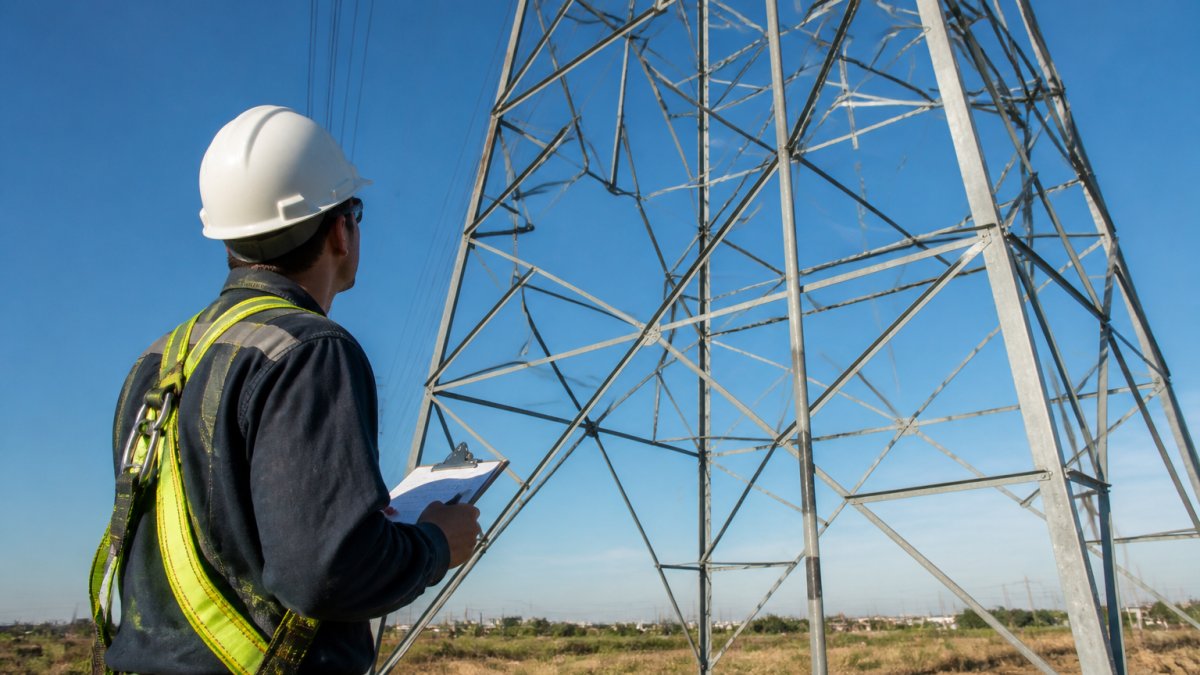
Systematic documentation of these structural findings serves as the essential foundation for a comprehensive electrical safety inspection.
A utility tower inspection checklist keeps the review consistent from tower to tower. Use the same categories every time so findings compare cleanly across visits.
Ground-Level and Structural Checks
Start at the base. Many serious problems show up first at ground level, before anyone climbs.
- Foundations: cracking, settlement, exposed concrete, erosion, or pooling water
- Legs and steel members: bending, buckling, dents, or missing parts
- Corrosion: rust, paint failure, and thinning steel, especially near the base
- Grounding connections and any buried hardware
- Site drainage and vegetation crowding the structure
Photograph every deficiency and note its location on the tower. A photo without a location is hard to act on later.
Bolts, Guy Wires, Insulators, and Attachments
Move up the structure and check the connections that hold it together.
- Bolts and connections: loose, missing, or corroded fasteners
- Guy wires: tension, fraying, corrosion, and anchor condition
- Insulators: cracks, chips, contamination, or burn marks
- Conductors and cabling: wear, sag, rubbing, or damaged fittings
- Antennas, mounts, and equipment shelters: secure mounting and condition
Rate each finding by severity. A cracked insulator and a loose bolt are not the same problem. Severity ratings help the utility prioritize repair.
Power Line Tower Inspection Methods: Climbing, Ground, and Aerial
Three methods cover most power line tower inspection work. Each has a place, and the best plans mix them.
| Method | Best For | Main Limit |
|---|---|---|
| Climbing | Close detail on bolts, joints, and connections | Highest risk; needs trained climbers and fall protection |
| Ground-level | Foundations, lower steel, corrosion, site hazards | Misses upper structure and hardware |
| Aerial and drone | Full-structure views, hard-to-reach assets, photo records | Weather limits and line-of-sight rules |
Climbing gives the closest look, but it puts a person on the steel. For a concrete example of drone tower inspection, see this guide to drone inspection for cell towers in the Hudson Valley. Readers can explore UAV inspection services for power lines that replace risky climbing.
Drone Inspection of Utility Towers: Limits and Safe Use
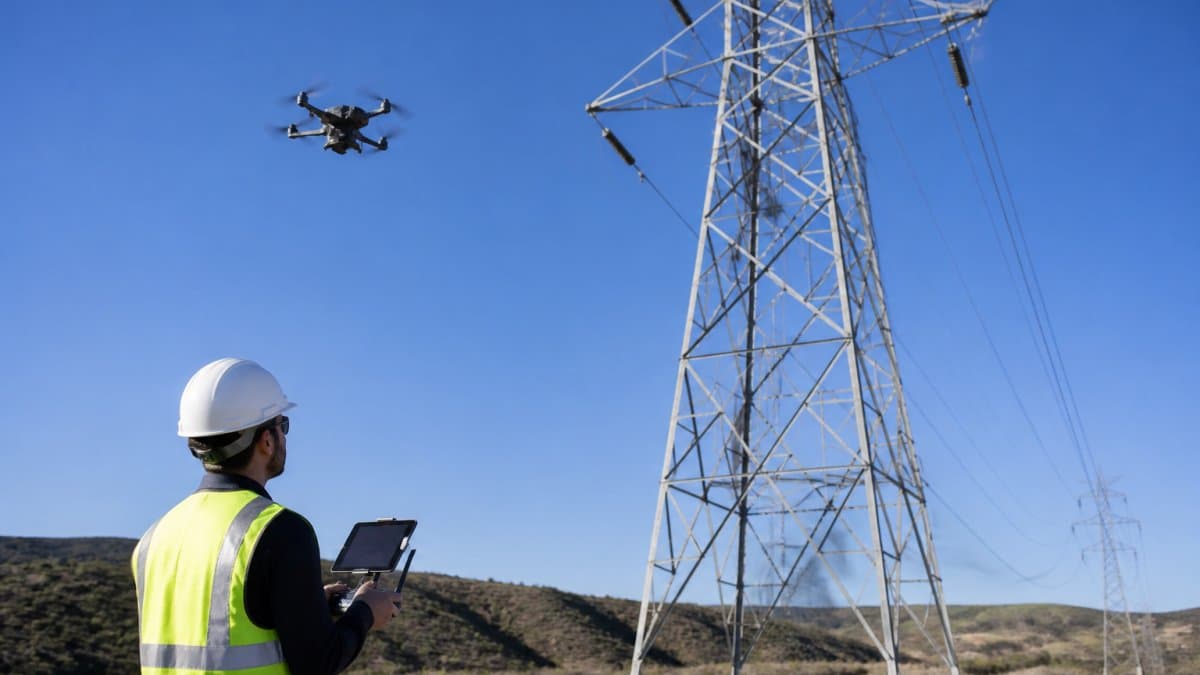
Drone inspection of utility towers is fast, repeatable, and keeps people off the steel. It is also regulated, and the limits matter.
Commercial drone flights in the United States run under FAA Part 107 rules. SkyeTech Aerial flies to Part 107 standards, and its operations are fully insured.
Know the limits before you fly:
- Wind, rain, and cold cut flight time and image quality
- You must keep the aircraft in visual line of sight
- Flying near energized lines needs planning and utility coordination
- Some sites need airspace authorization before launch
Drone inspection of utility towers works best as one layer in a full program, not a replacement for close-up checks where they are needed.
Utility Tower Inspection Best Practices for Reporting and Follow-Up
A field report is only useful if someone can act on it. Write findings so a repair crew can find the problem without calling you.
Include these in every report:
- Tower ID, date, inspector, and weather conditions
- Each deficiency with a photo and a location on the structure
- A severity rating and a recommended action
- A comparison to the last inspection to show change over time
- A clear list of safety hazards that need action now
Follow-up is where programs win or lose. Track every finding to closure. Re-inspect high-severity items on a shorter cycle and confirm the repair.
Good deliverables make this easier. Visit Our Work to see sample deliverables and inspection outputs.
Request a Drone Inspection Quote for Your Towers
Safe tower inspection comes down to planning, clear authority, and a documented record. The teams that get it right treat every tower as its own risk assessment.
SkyeTech Aerial supports that work with FAA-certified drone pilots, centimeter-level accuracy using drone photogrammetry and LiDAR, and platforms like DroneDeploy, Pix4D, and DJI Terra.
Want to inspect hard-to-reach towers without ladders or lifts? Contact us for a free quote on drone inspection for your towers.
Frequently Asked Questions
What should inspectors check on a utility tower?
A thorough utility tower inspection covers the foundation, steel members, bolts and connections, corrosion and coating condition, guy wires and their tension, insulators, conductors, and any attached antennas or cabling. Ground-level visual inspection catches many issues before anyone climbs, including leaning, missing hardware, and vegetation encroachment. Document every deficiency with photos and a severity rating so repairs can be prioritized.
How can drones make utility tower inspections safer?
Drone inspection of utility towers keeps crews off the structure for routine visual checks, reducing fall and electrical exposure. A remote pilot can capture high-resolution images of bolts, insulators, and connections without ladders or lifts, and thermal imaging can flag hot spots. Drones still have limits: they cannot tighten bolts or replace hardware, and flights must respect FAA Part 107 rules and stay clear of energized lines.
When should a utility tower inspection be stopped?
Stop the inspection if winds, lightning, or icing make climbing or flying unsafe, if electrical isolation has not been confirmed with the utility, or if you find a structural condition that puts the crew at risk. Any unexpected live conductor contact, unstable guy wire, or loose steel member is grounds to pause and escalate. Document the reason for stopping and reschedule once conditions are safe.
What safety precautions are needed before inspecting a utility tower?
Before work begins, confirm permits, review the utility tower inspection checklist, verify crew roles, and check that PPE and fall-protection gear are inspected and fit for use. Coordinate electrical isolation with the utility and establish approach boundaries. Assess weather and terrain, set up a rescue plan, and brief everyone on hazard recognition. A short pre-job meeting catches most problems before anyone leaves the ground.
Tower inspection programs fail when findings sit in a folder and no one acts. If you want a safer, faster way to document every tower and track repairs to closure, SkyeTech Aerial can help. Get started with SkyeTech Aerial and turn your next inspection into a clear, actionable record.