Drone Safety Standards for Infrastructure: A 2026 Guide
Table of Contents
- Understanding Drone Safety Standards for Infrastructure
- FAA Part 107 Drone Rules and Operating Requirements
- Drone Risk Assessment Checklist for Infrastructure Sites
- Drone Flight Safety Procedures and Best Practices
- Developing a Drone Emergency Response Plan
- Beyond FAA Baseline: Industry Standards and Certifications
- Infrastructure-Specific Operating Procedures and Risk Mitigation
- Frequently Asked Questions
Last Updated: October 5, 2026
Understanding Drone Safety Standards for Infrastructure
Drone safety standards for infrastructure combine regulatory compliance, operational discipline, and site-specific procedures to protect assets, personnel, and airspace.
At SkyeTech Aerial, we work daily with construction managers, utilities operators, and asset inspectors who know a single incident can shut down operations, damage equipment, or compromise public safety. Regulations alone don’t prevent accidents; a culture where every team member understands their safety role does.
This guide covers the standards, procedures, and frameworks for safe drone operations around infrastructure sites, moving beyond baseline FAA requirements to build a program that works on the ground.
FAA Part 107 Drone Rules and Operating Requirements
The FAA’s Part 107 regulations establish the legal baseline for all commercial drone operations in the United States. Violations carry significant penalties.
Part 107 requires all commercial drone pilots to hold a Remote Pilot Certificate, earned by passing the FAA knowledge test covering airspace rules, weather, emergency procedures, and aircraft limitations. For infrastructure work, this is your foundation.
Key operational requirements under Part 107 include:
- Aircraft weight limits (under 55 pounds for standard operations)
- Altitude restrictions (maximum 400 feet above ground level)
- Visual line-of-sight requirements (pilot must maintain unaided visual contact with the aircraft at all times)
- Daylight-only operations (unless specific waiver is obtained)
- Minimum distances from people and property (at least 30 feet horizontal distance from bystanders)
- No flights over moving vehicles or people not directly involved in the operation
- Registration of unmanned aircraft systems with the FAA
For infrastructure sites, the 400-foot limit often proves insufficient for inspecting tall structures like cell towers, wind turbines, or bridge spans.
Visual Line of Sight and Altitude Limits
Visual line of sight (VLOS) means the remote pilot or visual observer can see the aircraft with their own eyes throughout the flight, so the pilot can detect and avoid manned aircraft, obstacles, and hazards in real time.
The 400-foot ceiling is a hard regulatory limit under standard Part 107 operations. Exceeding it without an FAA waiver is a violation, regardless of how safe the operation feels.
Altitude limits interact with weather. Wind speed, visibility, and cloud ceiling all affect your actual operational ceiling, so a legally permissible 400 feet may still be unsafe in low visibility or high winds.
Airspace Restrictions and Critical Infrastructure
Controlled airspace (Class B, C, D, and E) surrounds airports and requires specific authorization before flight.
Critical infrastructure sites, such as power plants, water treatment facilities, pipelines, refineries, and telecommunications hubs, often sit within restricted airspace or near sensitive national security facilities.
Drone Risk Assessment Checklist for Infrastructure Sites
A structured risk assessment is the foundation of safe infrastructure operations. Before every flight, systematically evaluate hazards and confirm your plan mitigates them.
A comprehensive risk assessment examines:
- Environmental hazards: Wind speed and gusts, visibility conditions, precipitation, temperature extremes, electromagnetic interference from power lines or radio towers
- Airspace hazards: Manned aircraft activity, helicopter routes, nearby airports, restricted airspace, temporary flight restrictions
- Site hazards: Personnel on the ground, vehicles, structures, obstacles, power lines, communication towers, public access areas
- Operational hazards: Pilot fatigue, equipment limitations, battery condition, communication reliability, emergency procedures readiness
- Data security: How flight data will be stored, transmitted, and protected; who has access to sensitive site imagery
Document your risk assessment in writing with the date, location, weather, airspace classification, hazards, mitigations, and approval signatures. This ensures systematic thinking, provides evidence of due diligence if an incident occurs, and builds institutional knowledge for future operations.
For sites with high-value or sensitive assets, hold a formal safety briefing before flight so all personnel understand the flight plan, the hazards being mitigated, and their safety role. This matters most when multiple contractors are on site.
Drone Flight Safety Procedures and Best Practices
Safe operations depend on disciplined, consistent procedures. Every flight should follow a standardized checklist and clear communication among all team members.
Pre-Flight Inspection and Equipment Verification
Begin every flight day with a thorough equipment inspection.
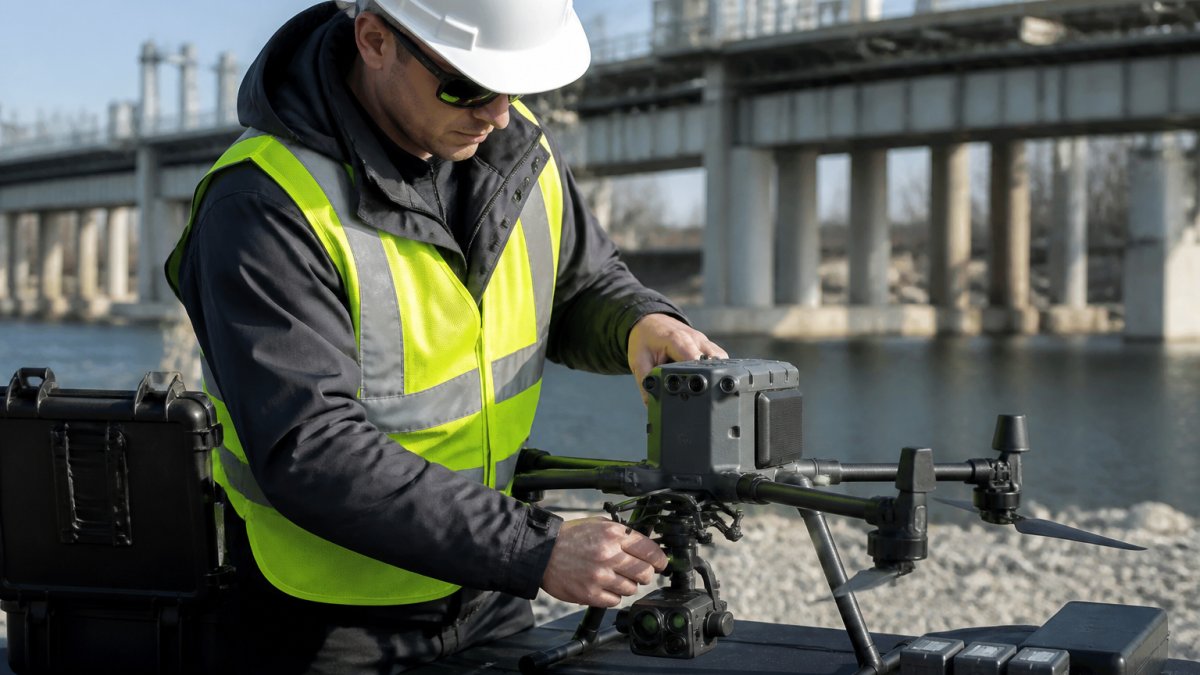
Test the controller’s joysticks, buttons, and antenna connections, confirm its battery is charged and software current, and check the camera and payload for secure mounting and function.
Calibrate the compass and run the aircraft’s self-diagnostic check before every flight. These steps take minutes but catch problems that could cause mid-flight failures. Document results and note any issues and how they were resolved.
Battery management is critical. Lithium batteries degrade with each charge cycle, so monitor health through the aircraft’s diagnostic system, replace any showing reduced capacity or damage, and never fly below 50% health rating.
On-Site Safety Protocols and Crew Coordination
Establish a clear chain of command for every flight. The remote pilot makes all flight decisions and maintains continuous control. A visual observer watches the aircraft and alerts the pilot to hazards.
Brief all personnel before flight on the flight plan, hazards being mitigated, and each person’s role if something goes wrong.
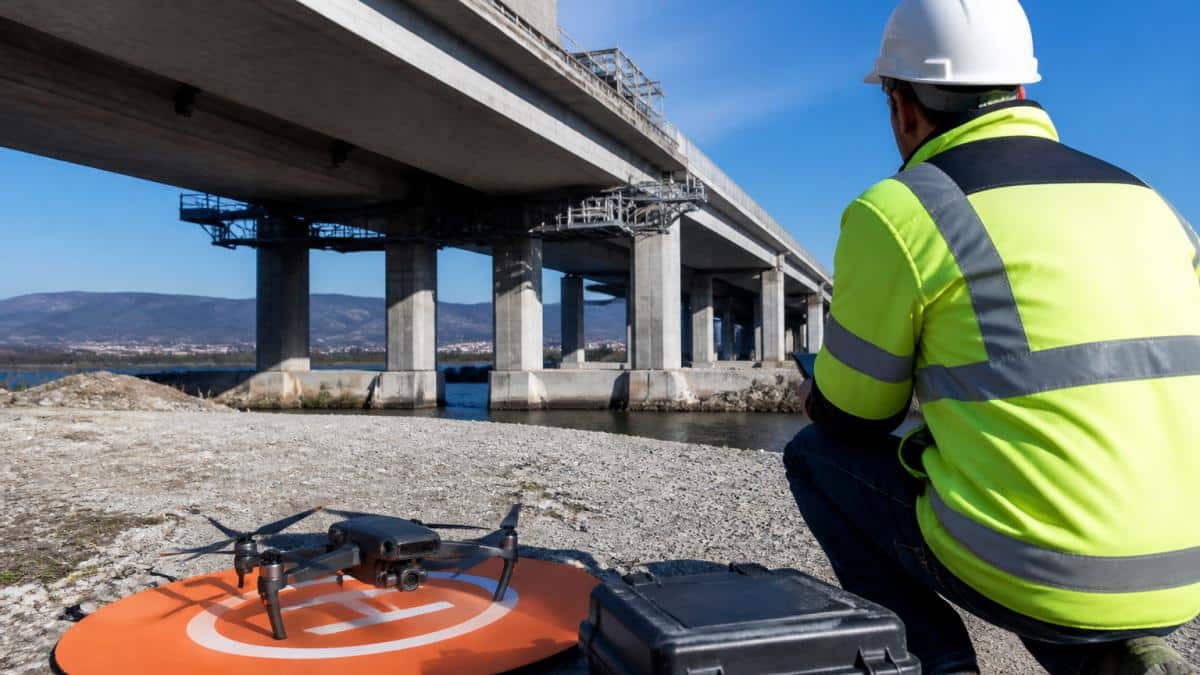
Maintain a safety perimeter around the launch and landing zone, keeping unauthorized personnel at least 100 feet away. Near public areas, add barriers or signage.
Weather is the most common reason to postpone flights. Wind gusts, reduced visibility, precipitation, and extreme temperatures degrade aircraft performance and pilot situational awareness.
Developing a Drone Emergency Response Plan
Despite careful planning, emergencies happen. A written emergency response plan ensures your team reacts effectively rather than improvising under stress.
Your emergency response plan should address:
- Loss of signal: What the aircraft will do (return to home, hover, or land), where it will likely go, and how to recover it
- Battery failure or low battery: Procedures for safe landing, designated emergency landing zones, and how to reach the aircraft if it lands in an inaccessible area
- Propeller damage or motor failure: How the aircraft will behave, safe landing procedures, and recovery steps
- Injury or medical emergency: First aid responsibilities, emergency contact procedures, and incident reporting
- Airspace intrusion: How to immediately land the aircraft and clear the area if manned aircraft approach
- Damage to property or injury to personnel: Documentation procedures, incident reporting, insurance notification, and regulatory reporting
The FAA requires reporting of certain incidents. Any accident involving injury, property damage exceeding $500, or loss of the aircraft must be reported to the FAA within 10 days. Document incidents thoroughly with photos, video, witness statements, and a timeline before memories fade.
Train your team on emergency procedures before they’re needed. Run scenarios during regular safety briefings so every member knows their role and can execute it under pressure.
Beyond FAA Baseline: Industry Standards and Certifications
FAA compliance is the legal minimum, not the ceiling. Many infrastructure operators and insurers expect higher standards than Part 107 alone requires.
Industry certifications from organizations focused on unmanned systems operations provide structured training beyond the FAA knowledge test, covering advanced risk management, complex site coordination, and infrastructure-specific procedures.
Insurance requirements often exceed regulatory minimums.
Data governance and cybersecurity are emerging standards in infrastructure drone operations. Inspection imagery may reveal sensitive details about facility layout, vulnerabilities, or operational status.
Infrastructure-Specific Operating Procedures and Risk Mitigation
Different infrastructure types present distinct hazards requiring tailored procedures.
Water and wastewater facilities: These sites often involve confined spaces, chemical hazards, and personnel working at heights.
Bridge and structural inspection: Tall structures require altitude waivers and may involve complex airspace coordination near airports.
For each site type, develop a site-specific safety plan documenting hazards, mitigations, approved flight areas, personnel roles, and emergency procedures.
Effective drone operations near infrastructure depend on systematic risk management, disciplined procedures, and a culture where safety is non-negotiable.
At SkyeTech Aerial, we conduct every flight to Part 107 standards and maintain the highest professional safety practices.
| Safety Element | Purpose | Frequency |
|---|---|---|
| Equipment inspection | Catch physical damage and functional issues | Before every flight |
| Risk assessment | Systematically evaluate hazards and mitigations | Before every flight |
| Airspace verification | Confirm legal operating area and restrictions | Before every flight |
| Weather evaluation | Ensure conditions are within operating limits | Before every flight |
| Crew briefing | Align team on plan, roles, and emergency procedures | Before every flight |
| Emergency response drill | Train team on procedures under pressure | Quarterly minimum |
| Incident documentation | Create record for learning and regulatory compliance | After any incident |
Frequently Asked Questions
What FAA rules apply to commercial drone inspections of infrastructure?
Commercial drone operations fall under FAA Part 107, which requires remote pilots to maintain visual line of sight, operate below 400 feet altitude, and avoid airspace within 5 nautical miles of airports without authorization. For critical infrastructure like power plants, transmission lines, and water treatment facilities, operators must also comply with facility-specific restrictions and may need additional waivers. Part 107 also mandates that unmanned aircraft systems weigh no more than 55 pounds and prohibits careless or reckless operation that endangers people or property.
How should teams assess risks before an infrastructure drone flight?
A comprehensive drone risk assessment checklist should evaluate airspace type (Class G, controlled, or restricted), proximity to manned aircraft operations, weather conditions, payload weight and sensors, ground hazards, and facility security protocols. Identify potential incidents such as equipment failure, loss of visual line of sight, or interference with facility operations. Document the flight area, establish exclusion zones, verify remote pilot certification, confirm insurance coverage, and confirm coordination with facility owners or security personnel. This structured approach reduces hazards and ensures compliance with both FAA requirements and facility-specific safety procedures.
What should an infrastructure drone emergency response plan include?
A drone emergency response plan must define procedures for loss of visual line of sight, battery failure, loss of signal, or unplanned landing. Include communication protocols between the remote pilot, visual observer, and facility personnel. Establish clear procedures for immediate flight termination, emergency landing zones, and incident reporting. Assign roles and responsibilities, identify emergency contacts at the facility and with local authorities, and document how to secure the unmanned aircraft system after an incident. Regular training and drills ensure the team can execute the plan quickly under pressure.
Can drones fly near critical infrastructure sites like power plants or water treatment facilities?
Drones can operate near critical infrastructure, but strict restrictions apply. Operators must obtain authorization from facility owners, comply with facility security protocols, and may require special airspace authorization from the FAA if the site is in restricted airspace. Many critical infrastructure sites have designated no-fly zones or require notification to security personnel before operations. Remote pilots must understand the facility’s hazards, restricted areas, and communication procedures. Coordination between the drone operator and facility management is essential to prevent security incidents and ensure safe operations.
What certifications and compliance standards does a professional drone operator need for infrastructure work?
Remote pilots conducting infrastructure inspections must hold an FAA Part 107 certificate, which requires passing a knowledge test and demonstrating operational competency. Beyond FAA certification, operators should carry liability insurance and maintain current training on Part 107 rules, airspace authorization, and industry-specific standards. Many infrastructure clients require operators to follow additional standards such as OSHA guidelines for site safety, facility-specific security clearances, and documented safety procedures. FAA-certified pilots with documented experience in infrastructure inspection and a track record of safe operations provide the highest assurance of compliance and professional standards.
How do drone safety standards differ between construction sites and utility infrastructure?
Construction sites typically have more dynamic environments with moving equipment, changing layouts, and active worker traffic, requiring constant coordination with site management and hazard awareness. Utility infrastructure, such as power lines and pipelines, involves fixed hazards, restricted airspace, and facility security protocols. Both require Part 107 compliance, but utility work often demands additional airspace authorization, facility owner approval, and coordination with national security agencies. Construction sites benefit from frequent, routine flights for progress tracking, while utility inspections may require specialized equipment like thermal imaging or LiDAR sensors. Risk assessment and operating procedures must be tailored to the specific infrastructure type and site conditions.
What is the difference between a visual observer and a remote pilot in infrastructure drone operations?
The remote pilot operates the unmanned aircraft system and maintains primary control and navigation. The visual observer is a second crew member who maintains visual line of sight with the drone, scans for other aircraft or hazards, and alerts the pilot to safety concerns. For infrastructure inspections in complex airspace or near obstacles, a visual observer is critical for safe operations. The visual observer does not need a Part 107 certificate but must be trained on communication protocols, hazard recognition, and emergency procedures. This two-person crew model significantly reduces the risk of loss of visual line of sight and improves incident response.